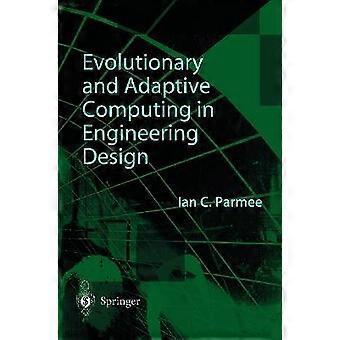
Evolutionary and Adaptive Computing in Engineering Design
$199.00
+ $12.49 Shipping

Evolutionary and Adaptive Computing in Engineering Design

Sold by:
Evolutionary and Adaptive Computing in Engineering Design

$199.00

In stock
+ $12.49 Shipping

14-Day Returns Policy

Payment methods:

  • Brand: Unbranded

Product details

Product details

Evolutionary and Adaptive Computing in Engineering Design

1. 1 Setting the Scene. - 1. 2 Why Evolutionary/Adaptive Computing?. - 1. 3 The UK EPSRC Engineering Design Centres. - 1. 4 Evolutionary and Adaptive Computing Integration. - 1. 5 Generic Design Issues. - 1. 6 Moving On. - 2. Established Evolutionary Search Algorithms. - 2. 1 Introduction. - 2. 2 A Brief History of Evolutionary Search Techniques. - 2. 3 The Genetic Algorithm. - 2. 4 GA Variants. - 2. 5 Evolution Strategies. - 2. 6 Evolutionary Programming. - 2. 7 Genetic Programming. - 2. 8 Discussion. - 3. Adaptive Search and Optimisation Algorithms. - 3. 1 Introduction. - 3. 2 The Ant-colony Metaphor. - 3. 3 Population-based Incremental Learning. - 3. 4 Simulated Annealing. - 3. 5 Tabu Search. - 3. 6 Scatter Search. - 3. 7 Discussion. - 4. Initial Application. - 4. 1 Introduction. - 4. 2 Applying the GA to the Shape Optimisation of a Pneumatic Low-head Hydropower Device. - 4. 3 The Design ofGas Turbine Blade Cooling Hole Geometries. - 4. 5 Evolutionary Design of a Three-centred Concrete Arch Dam. - 4. 6 Discussion. - 5. The Development of Evolutionary and Adaptive Search Strategies for Engineering Design. - 5. 1 Introduction. - 5. 2 Cluster-oriented Genetic Algorithms. - 5. 3 The GAANT (GA-Ant) Algorithm. - 5. 4 DRAM and HDRAM Genetic Programming Variants. - 5. 5 Evolutionary and Adaptive Search Strategies for Constrained Problems. - 5. 6 Evolutionary Multi-criterion Satisfaction. - 5. 7 Designer Interaction within an Evolutionary Design Environment. - 5. 8 Dynamic Shape Refinement and Injection Island Variants. - 5. 9 Discussion. - 6. Evolutionary Design Space Decomposition. - 6. I Introduction. - 6. 2 Multi-modal Optimisation. - 6. 3 Cluster-oriented Genetic Algorithms. - 6. 4 Application of vmCOGA. - 6. 5 Alternative COGA Structures. - 6. 6 Agent-assisted Boundary Identification. - 6. 7 Discussion. - 7. Whole-system Design. - 7. 1 Introduction. - 7. 2 Previous Related Work. - 7. 3 The Hydropower System. - 7. 4 The Structured Genetic Algorithm. - 7. 5 Simplifying the Parameter Representation. - 7. 6 Results and Discussion. - 7. 7 Thermal Power System Redesign. - 7. 8 Discussion. - 8. Variable-length Hierarchies and System Identification. - 8. 1 Introduction. - 8. 2 Improving Rolls Royce Cooling Hole Geometry Models. - 8. 3 Discussion of Initial Application. - 8. 4 Further Development of the GP Paradigm. - 8. 5 Symbolic Regression with HDRAM-GP. - 8. 6 Dual-agent Integration. - 8. 7 Return to Engineering Applications. - 8. 8 Discussion. - 9. Evolutionary Constraint Satisfaction and Constrained Optimisation. - 9. 1 Introduction. - 9. 2 Dealing with Explicit Constraints. - 9. 3 Implicit Constraints. - 9. 4 Defining Feasible Space. - 9. 5 Satisfying Constraint in the Optimisation of Thermal Power Plant Design. - 9. 6 GA/Ant-colony Hybrid for the Flight Trajectory Problem. - 9. 7 Other Techniques. - 9. 8 Discussion. - 10. Multi-objective Satisfaction and Optimisation. - 10. 1 Introduction. - 10. 2 Established Multi-objective Optimisation Techniques. - 10. 3 Interactive Approaches to Multi-objective Satisfaction/Optimisation. - 10. 4 Qualitative Evaluation ofGA-generated Design Solutions. - 10. 5 Cluster-oriented Genetic Algorithms for Multi-objective Satisfaction. - 10. 6 Related Work and Further Reading. - 10. 7 Discussion. - 11. Towards Interactive Evolutionary Design Systems. - 11. 1 Introduction. - 11. 2 System Requirements. - 11. 3 The Design Environment and the IEDS. - 11. 4 The Rule-based Preference Component. - 11. 5 The Co-evolutionary Environment. - 11. 6 Combining Preferences with the Co-evolutionary Approach. - 11. 7 Cluster-oriented Genetic Algorithm s as Information Gathering Processes. - 11. 8 Machine-based Agent Support. - 11. 9 Machine-based Design Space Modification. - 11. 10 Discussion. - 12. Population-based Search Shape Optimisation and Computational Expense. - 12. 1 Introduction. - 12. 2 Parallel Distributed and Co-evolutionary Strategies. - 12. 3 Introducing the Problem and the Developed Strategies. - 12. 4 The Evaluation Model. - 12. 5 Initial Results. - 12. 6 Dynamic Shape Refinement. - 12. 7 The Injection Island GA. - 12. 8 Dynamic Injection. - 12. 9 Distributed Search Techniques. - 12. 10 Discussion. - 13. Closing Discussion. - 13. 1 Introduction. - 13. 2 Difficulties Facing Successful Integration ofEC with Engineering Design. - 13. 3 Overview of the Techniques and Strategies Introduced. - 13. 4 Final Remarks. - Appendix A. Some Basic Concepts. - References. Language: English
  • Brand: Unbranded
  • Category: Computing & Internet
  • Artist: Ian C. Parmee
  • Format: Paperback
  • Language: English
  • Publication Date: 2012/09/08
  • Publisher / Label: Springer
  • Fruugo ID: 337861004-741519940
  • ISBN: 9781447110613
Delivery

Delivery

Dispatched within 5 days

  • STANDARD: $12.49 - Delivery between Tue 13 October 2026–Fri 16 October 2026

Shipping from United Kingdom.

Returns

Returns

We do our best to ensure that the products that you order are delivered to you in full and according to your specifications. However, should you receive an incomplete order, or items different from the ones you ordered, or there is some other reason why you are not satisfied with the order, you may return the order, or any products included in the order, and receive a full refund for the items.

View full return policy