描述
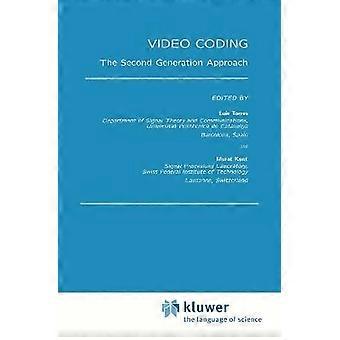
Video Coding
1 Second Generation Video Coding Techniques. - 1 Introduction. - 2 The problems of the canonical representation of images. - 3 First generation video coding techniques. - 4 Second generation video coding techniques. - 5 Segmentation-based video coding results. - 6 MPEG-4 functionalities. - 7 Conclusions and new trends. - 2 Pixel-Based Video Compression Schemes. - 1 Introduction. - 2 Fundamentals of pixel-based techniques. - 3 Video coding standards. - 4 Pixel-based schemes: Properties and possible improvements. - 5 Conclusions. - 3 Coding-Oriented Segmentation of Video Sequences. - 1 Introduction. - 2 Problem statement. - 3 A general structure for segmentation. - 4 An implementation based on compound random fields. - 5 An implementation based on morphological tools. - 6 Conclusions. - 4 Coding of Partition Sequences. - 1 Introduction. - 2 Problem statement. - 3 Intra-frame coding. - 4 Inter-frame coding. - 5 Conclusions. - 5 Region-Oriented Texture Coding. - 1 Introduction. - 2 Data compression by approximation. - 3 Orthogonal basis functions for arbitrarily shaped regions. - 4 Region-oriented transform coding. - 5 Region-oriented video coding. - 6 Conclusions. - 6 Segmentation-Based Motion Estimation for Second Generation Video Coding Techniques. - 1 Introduction. - 2 Motion models. - 3 Segmentation-based fully parametric motion estimation. - 4 Spatio-temporal segmentation. - 5 Tracking. - 6 Conclusions. - 7 Fractal-Based Image and Video Coding. - 1 Introduction. - 2 Basic theory. - 3 Implementations. - 4 Conclusions. - 8 Model-Based Video Coding. - 1 Introduction: A dream in 1962. - 2 Model-based approaches to image coding. - 3 3-D model-based coding of a person's face. - 4 2-D model-based approach using 2-D deformable triangles for advanced motion compensation. - 5 Hybrid of 3-D and 2-D model-based coding schemes. -6 Applications of 3-D model-based coding. - 9 A Perceptually Motivated Three-Component Image Model. - 1 Introduction. - 2 Psychovisual aspects of the human visual system. - 3 Characterization of strong edges. - 4 Extraction of strong edge information and the three-component image model. - 5 Coding of primary component. - 6 Coding of smooth and texture components. - 7 Image coding systems. - 8 Perceptual weighting of distortions. - 9 Video coding using the three-component image model. - 10 Conclusions. - 10 Extended Signal-Theoretic Techniques for Very Low Bit-Rate Video Coding. - 1 Introduction. - 2 Motion information. - 3 Visual perception. - 4 Signal-dependent coding. - 5 Spatio-temporal information. - 6 Acknowledgments. Language: English
-
品牌:
Unbranded
-
类别:
计算机与互联网
-
语言:
English
-
出版日期:
2011/10/07
-
艺术家:
Luis Torres
-
页数:
434
-
出版社/标签:
Springer
-
格式:
Paperback
-
Fruugo ID:
337883428-741542742
-
ISBN:
9781461285755